
The Bloody Mary game has been a chilling staple of sleepovers, urban legends, and schoolyard dares for decades.
Known for its eerie simplicity and spine-tingling suspense, it involves a mirror, a name repeated in the dark, and a legendary ghost. But how do you play Bloody Mary properly and safely?
This guide explores how to play the game, the rules and warnings involved, the myth’s origins, and even real-life stories people have shared online.
What Is the Bloody Mary Game?
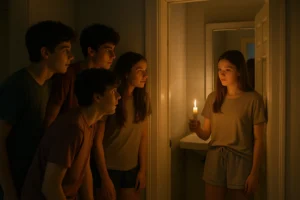
The Bloody Mary game is a well-known supernatural ritual rooted in folklore and urban legend. Typically played in dark or dimly lit rooms, most often bathrooms, participants chant the name “Bloody Mary” into a mirror, hoping or fearing that she will appear.
While it is often considered a harmless game or dare among young people, the ritual is associated with centuries-old traditions of catoptromancy, or divination through mirrors.
In its modern form, the ritual involves:
- Standing alone or in a group in front of a mirror
- Turning off all the lights or lighting a candle
- Repeating the name “Bloody Mary” a specific number of times
The number of chants varies in different versions. Some say three times is sufficient, while others claim she only appears after her name is repeated thirteen, forty-seven, or more times.
If summoned, she may manifest in the mirror as a ghostly figure, corpse, witch, or even a demonic entity.
Her appearance can be silent or terrifyingly violent, depending on the version of the legend.
In some retellings, the Bloody Mary figure:
- Screams or curses at the summoner
- Scratches their face or eyes
- Steals their soul
- Appears covered in blood or with glowing red eyes
While it remains a game for most, the underlying idea draws from a deeper historical tradition of mirror-based rituals and spiritual conjuring.
Some accounts describe her as benevolent, while others label her malevolent or demonic, which adds layers of fear and uncertainty to the experience.
Group participation is common, and many report that the tension builds more effectively when several people play together.
The growing sense of fear among participants often leads to a shared emotional experience, even if nothing supernatural occurs.
Where Did the Bloody Mary Legend Come From?
The origins of the Bloody Mary legend are complex, drawing from folklore, historical interpretation, and cultural storytelling passed down over generations.
The figure of Bloody Mary may be rooted in older divination rituals, with modern adaptations influenced by history, horror fiction, and psychological phenomena.
Historical Divination Ritual
Long before the popular bathroom mirror version existed, a different mirror-based ritual was practised in the West, particularly among young women.
This version had less to do with summoning a ghost and more to do with fortune-telling.
Participants would:
- Walk backwards up a flight of stairs at night
- Hold a candle in one hand and a hand mirror in the other
- Gaze into the mirror hoping to glimpse their future husband’s face
However, if the woman saw a skull or the image of the Grim Reaper instead, it was considered an omen of death before marriage.
This older ritual reflects how mirrors were used not only for reflection but as supposed gateways to future knowledge or hidden spirits.
Modern Ritual Evolution
The contemporary version of the Bloody Mary ritual involves a more direct act of summoning a spirit.
Known as an act of catoptromancy, it centres on invoking Bloody Mary by chanting her name repeatedly into a mirror in a dim or candle-lit setting.
While the most common chant is three repetitions, some versions specify higher counts such as thirteen or even forty-seven.
Key elements include:
- A darkened bathroom or quiet room with a mirror
- A candle or no lighting at all
- The repetition of “Bloody Mary,” or variations like “Hell Mary” or “Mary Worth”
Once summoned, Bloody Mary is said to appear in various forms corpse, ghost, witch, or demon. She might scream, curse, harm, or simply appear silently, depending on the story.
The ritual became especially popular in the 1990s, both as a cultural phenomenon and a tool in discussions of gender oppression, racial history, and trauma.
It found its way into films, books, and classroom folklore as a shared social experience, often reflecting deeper anxieties in society.
Possible Historical Figures Behind Bloody Mary
There is ongoing debate about the identity of Bloody Mary and whether she is based on a real person. Several historical candidates have been proposed:
| Name | Background | Connection to the Legend |
| Mary I of England | Daughter of Henry VIII and Catherine of Aragon. Reigned from 1553 to 1558. | Ordered the execution of approximately 300 Protestants, earning her the nickname “Bloody Mary” |
| Mary Worth | A name linked to various stories | Sometimes depicted as a woman executed during the witch trials or accused of killing slaves fleeing via the Underground Railroad |
| Other variations | Include names like “Hell Mary” or “Mary Whales” | These alternate identities may reflect regional adaptations of the legend |
Some scholars also draw comparisons to Hanako-san, a Japanese urban legend involving a ghost girl in a school restroom. This similarity suggests that the archetype of a summoned female spirit in a confined space is not unique to Western folklore.
In combining historical executions, witchcraft persecution, folklore rituals, and teenage dares, the Bloody Mary legend serves as a cultural mirror of fear, punishment, and curiosity. The ambiguity of her identity—witch, queen, murderer, or myth—only deepens the game’s haunting mystique.
What Are the Rules of the Bloody Mary Game?
The game of Bloody Mary is structured around a few core rules that create a suspenseful and spooky experience. The rules vary slightly depending on the region or the version passed around, but the basic structure remains consistent.
General Rules
- The game must be played in a dark room with a mirror, typically a bathroom
- The player must chant “Bloody Mary” three times while looking into the mirror
- Silence and concentration are required to complete the ritual
Conditions That May Vary
| Rule Element | Common Version | Alternative Versions |
| Number of Chants | 3 times | 13 or more times |
| Time of Day | Any night time | Exactly at midnight |
| Lighting | Complete darkness | Candlelight only |
| Number of Players | Alone | Small group of 2–4 people |
| Additional Actions | None | Spinning around or clapping |
It is widely believed among players that breaking these rules could stop the spirit from appearing or bring unwanted consequences.
How to Play Bloody Mary?
The process of how to play Bloody Mary requires a few preparations, calm execution, and awareness of what to expect. While the result is purely based on legend and psychological suggestion, following these steps makes the experience more immersive.
Game Setup
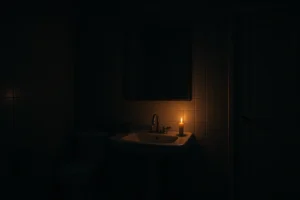
Step 1: Gather the Necessary Items
Before playing, make sure you have:
- A mirror, preferably wall-mounted and at eye level
- A dark room, typically a bathroom that can be fully closed off from light
- A candle and matches (optional but commonly used in some versions)
Step 2: Prepare the Room
- Switch off all lights in the room
- Close the door and make sure there is no source of noise or distraction
- If using a candle, light it and place it near the mirror, but safely
Performing the Ritual
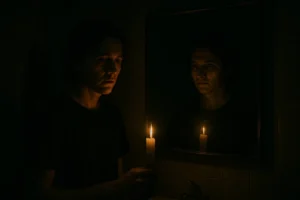
Step 3: Stand in Position
Stand about one foot away from the mirror. Make sure you are alone in the room unless you are playing one of the group-based variations. Stay silent and keep your focus on your own reflection.
Step 4: Begin the Chanting
Chant the name “Bloody Mary” three times while looking directly into the mirror. In some versions of the game, players chant it thirteen or more times. The chanting should be consistent and spoken in a calm, firm tone.
Step 5: Try a Variation if Nothing Happens
If no reaction or visual distortion occurs, some players choose to:
- Spin in a circle three times while continuing the chant
- Clap their hands once after the chant
- Stare into their own eyes in the reflection for one minute without blinking
These variations are based on versions of the game spread through folklore and online communities.
Ending the Game
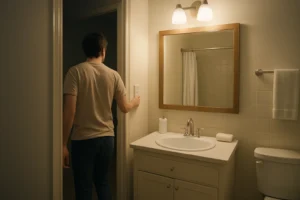
Step 6: Responding to Any Appearance
Players report seeing vague outlines, a ghostly face, or red glowing eyes in the mirror. If you see anything:
- Avoid touching the mirror
- Remain calm and composed
- Do not continue chanting
Step 7: Safely End the Game
If the player becomes scared or disturbed, the safest way to end the ritual is to:
- Turn on the lights immediately
- Blow out the candle if used
- Leave the room and speak to someone if needed
Players should avoid playing the game repeatedly in the same night or making jokes about the ritual. Respect is often emphasised, even if the game is meant for fun.
Are There Different Versions of the Bloody Mary Game?
Over time, numerous versions of the Bloody Mary ritual have been developed, often spread through schools, internet forums, or horror-themed media. Each version modifies certain steps to make the ritual feel more intense or authentic.
Common Variants Across Locations
| Variant Name | Key Changes | Purpose |
| Midnight Summoning | Played at exactly 12:00 a.m. | Tied to superstition of heightened spirit activity |
| Group Ritual | 2–4 players chant together | Shared experience reduces fear |
| Candle Ritual | Only candlelight allowed | Adds visual distortion to enhance belief |
| Spinning Variant | Spinning three times while chanting | Said to make the spirit more visible |
| Water Mirror | Water dripped on mirror before chanting | Increases reflective distortion effects |
These alternate forms are not officially documented but widely accepted in oral tradition and online communities.
What Are the Risks of Playing Bloody Mary?
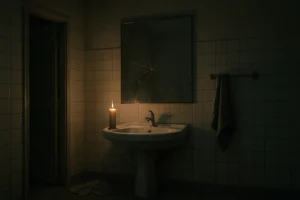
While the Bloody Mary game is not physically harmful in design, there are certain risks to consider, particularly psychological and environmental.
Psychological Risks
- Panic attacks or heightened anxiety in easily frightened individuals
- Vivid nightmares or disturbed sleep following the ritual
- Lingering feelings of being watched or unease in the dark
Physical Risks
- Tripping or bumping into furniture in a dark room
- Potential fire hazard from candle use
- Accidental injuries caused by fear-induced reactions (e.g., falling)
Why People Experience Frightening Visuals?
Scientific studies explain that the fear and visuals seen during the ritual are often the result of sensory deprivation and brain processing. The Troxler Effect, a phenomenon where the brain stops registering unchanging stimuli, causes parts of your own face to appear distorted after staring into a mirror for a long time in low light.
This can create illusions of shifting faces, shadows, or ghostly figures, even when nothing supernatural is present.
Is Bloody Mary Real or Just a Myth?
Despite the vast number of personal stories and shared experiences, there is no scientific proof that the Bloody Mary spirit is real. Most visual disturbances and eerie feelings can be traced back to psychological responses.
The combination of:
- Low lighting
- Suggestion from legend
- Heightened fear
- Staring at your reflection for an extended time
can lead to a believable but ultimately explainable experience.
Players who claim to see Bloody Mary often describe similar details, such as:
- A woman with long hair and pale skin
- Blood around the eyes or mouth
- A sharp scream or whisper
These consistencies may be attributed to the cultural storytelling that shapes the expected outcome of the game.
Conclusion
While often dismissed as a childhood game or urban myth, the Bloody Mary ritual continues to captivate and unsettle players around the world.
Whether approached as harmless fun or a serious test of courage, understanding how to play Bloody Mary properly adds both context and caution.
Rooted in folklore and psychological phenomena, the game serves as a fascinating example of how belief, fear, and ritual continue to shape modern legends and shared cultural experiences.
FAQs About Bldy Mary
What happens if you play Bloody Mary at 3 a.m.?
Playing at 3 a.m. often referred to as the “witching hour” is believed to increase spiritual activity. It may intensify fear, but there’s no evidence it changes the result.
Is the Bloody Mary game dangerous?
Physically, no unless candles are misused. Psychologically, it can be distressing for some, especially younger or more imaginative players.
Can Bloody Mary actually hurt you?
There are no proven cases of harm. Claims of scratches or injuries are anecdotal and often explained by existing marks or heightened fear.
Why do people see things in the mirror?
The brain can create hallucinations in low light due to the Troxler Effect and expectation. This is why people might “see” Bloody Mary even though she isn’t there.
How old should you be to play Bloody Mary?
It’s best for ages 12 and up, with adult supervision or group settings. Young children may find it too scary or confusing.
Can you play Bloody Mary in daylight?
You can, but it won’t have the same effect. The darkness is key to creating the visual tricks that fuel the legend.
Are there alternatives to the Bloody Mary game?
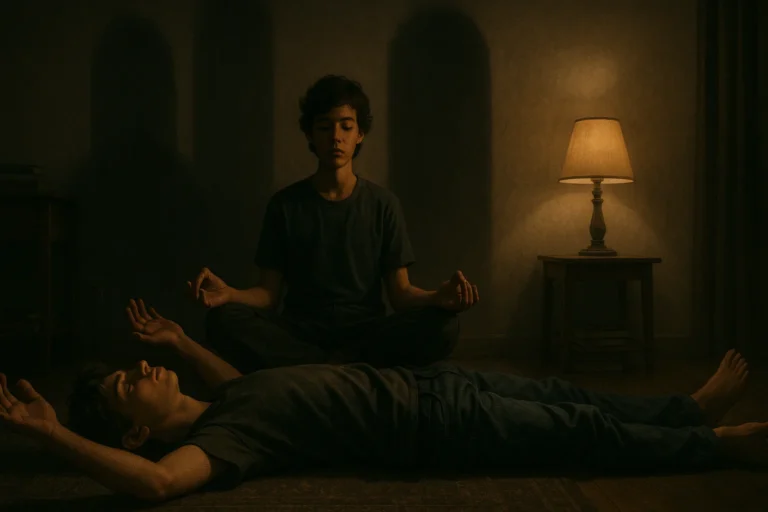
Yes. Games like “Light as a Feather, Stiff as a Board” or “Charlie Charlie” offer similar eerie fun without involving mirrors or isolation.