
A Nintendo and The Pokémon Company patent application connected to the ongoing Palworld legal dispute has remained rejected by the Japan Patent Office, or JPO.
Japanese patent application No. 2026-019762 covers an in-game monster-capturing system involving touch-screen controls. The examiner concluded that its claims lacked an inventive step when compared with earlier publicly available material.
One of the most important references was a 2013 gameplay video showing the unofficial fan game Pokémon Generations. Nintendo objected to the use of that video, but the JPO reportedly maintained its rejection in an unusually direct written response.
However, the decision does not mean that Nintendo has lost its lawsuit against Palworld developer Pocketpair. The rejected application belongs to a related patent family, but it is not one of the three granted patents currently identified in the court case.
Nintendo Palworld Patent Dispute Summary:
| Key detail | Current position |
| Patent applicants | Nintendo Co., Ltd. and The Pokémon Company |
| Application number | Japanese patent application No. 2026-019762 |
| Publication number | JP 2026-077713 |
| Technology involved | An in-game monster-capturing system |
| JPO concern | The claims lacked an inventive step |
| Important prior art | A 2013 Pokémon Generations gameplay video |
| Lawsuit filed | 18 September 2024 |
| Court | Tokyo District Court |
| Defendant | Pocketpair, developer of Palworld |
| Patents named in the lawsuit | No. 7545191, No. 7493117 and No. 7528390 |
| Does the rejection end the lawsuit? | No |
| Latest reported patent status | Rejection decision under review |
What Happened to Nintendo’s Palworld-Related Patent?

The latest development in the Nintendo Palworld patent dispute concerns Japanese patent application No. 2026-019762, published as JP 2026-077713.
The divisional application describes a game system in which a player uses touch-panel controls to select and throw an object towards a character in a virtual environment. If the object successfully reaches the target, the character can be captured.
A divisional application separates selected claims from an earlier patent filing so that the claims can be examined independently. It remains connected to the original patent family but follows its own examination process.
According to Automaton’s detailed reporting on the JPO documents, the examiner maintained that Nintendo’s claimed system did not demonstrate the inventive step required for patent protection.
The rejection has attracted particular attention because of the examiner’s unusually forceful response to Nintendo’s counterarguments.
Why Did the Japan Patent Office Reject the Application?
The main reason for rejection was a lack of inventive step.
In patent law, an invention generally needs to be both new and sufficiently non-obvious.
An examiner may reject a patent when the claimed system could have been reasonably developed by a person skilled in the relevant field using information that was already publicly available.
This does not necessarily mean that Nintendo copied another game. It means the examiner was not persuaded that the specific combination of features described in the claims represented a sufficiently inventive technical development.
Prior art considered during patent examination can include:
- Previously published patents
- Existing video games and software
- Technical documents
- Public demonstrations
- Gameplay videos available before the relevant filing date
The JPO cited several earlier references when examining the application. The most widely discussed was a YouTube video uploaded in 2013 showing gameplay from Pokémon Generations.
Why Was the Pokémon Generations Video Important?
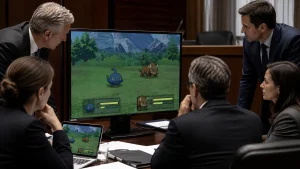
Pokémon Generations was an unofficial, fan-created 3D Pokémon game. A gameplay video showed a player selecting a Poké Ball-style object and throwing it towards a Pokémon character to capture it.
The JPO considered this interaction relevant because it appeared to disclose important elements of the system later described in Nintendo’s application.
Nintendo reportedly argued that the video should not be treated as a valid reference partly because the fan project used Pokémon characters, terminology and other material without official approval.
The examiner rejected that argument.
As explained in the GamesRadar report on the patent rejection, the JPO’s position was that possible copyright infringement did not determine whether the gameplay shown in the video could be considered prior art.
In practical terms, the examiner treated the following as separate questions:
- Whether the fan game may have infringed copyright
- Whether its publicly shown gameplay disclosed relevant technical features
- Whether Nintendo’s later patent claims involved an inventive step
The examiner also reportedly stated that replacing the names of the characters and objects would not change the technical reason for rejection.
Why Has the JPO’s Wording Attracted So Much Attention?
Patent office correspondence is normally technical, formal and restrained. In this case, parts of the examiner’s response were interpreted as unusually blunt.
Japanese patent attorney Kiyoshi Kurihara reportedly observed that both Nintendo’s objections and the examiner’s written response contained language rarely seen in ordinary patent practice.
Some gaming publications have described the response as “sassy” or “scalding”. These descriptions reflect the tone perceived by reporters and commentators rather than a separate legal finding.
The legally important point is that Nintendo’s objections did not persuade the examiner to withdraw the rejection.
Nintendo has reportedly filed a petition seeking a review of that decision, meaning the patent’s final position could still change through the available examination or appeal procedures.
Is This the Patent Nintendo Is Using Against Palworld?

The rejected application is connected to Nintendo’s broader patent strategy, but it is not one of the three granted patents that Pocketpair says are being asserted in the lawsuit.
Nintendo and The Pokémon Company filed their patent infringement action in the Tokyo District Court on 18 September 2024.
In its official announcement of the lawsuit against Pocketpair, Nintendo said that it was seeking an injunction and compensation for damages because Palworld allegedly infringed multiple patent rights.
Pocketpair later identified the three patents involved:
- Japanese Patent No. 7545191
- Japanese Patent No. 7493117
- Japanese Patent No. 7528390
The registration and application dates for these patents are available in Pocketpair’s official report on the patent infringement lawsuit.
Application No. 2026-019762 belongs to a related patent family. Its rejection may influence Nintendo’s wider legal and patent strategy, but it does not automatically invalidate the three granted patents named in the court proceedings.
Does the Patent Rejection Mean Pocketpair Has Won?
No. The patent office decision and the Tokyo District Court lawsuit are separate proceedings.
The JPO was assessing whether application No. 2026-019762 met the legal requirements for obtaining a patent. The court case must determine different questions, including whether Palworld infringed the granted patents identified by the claimants.
The rejection does not establish that:
- Pocketpair has won the lawsuit
- Palworld infringes no Nintendo patents
- The three existing patents are invalid
- Nintendo must withdraw its court action
- All monster-capturing mechanics are unpatentable
It establishes only that the examiner was not satisfied that the claims in this particular application involved a sufficient inventive step in their examined form.
How Could the Rejection Affect the Palworld Lawsuit?

Although the rejected application is not one of the three patents named in the lawsuit, the decision may still have strategic importance.
Prior Art Could Become More Important
The rejection demonstrates that older games, public demonstrations and gameplay videos can be considered when assessing whether a game mechanic is genuinely inventive.
Pocketpair may rely on comparable evidence when challenging the validity or interpretation of the patents asserted against it.
Nintendo May Need to Narrow Its Patent Claims
To overcome prior-art objections, an applicant may need to amend its claims so that they describe a more specific and technically distinct invention.
Narrower claims may be easier to defend as inventive, but they can also cover a smaller range of gameplay systems.
The Decision Could Influence Related Applications
Applications in the same patent family may contain overlapping technical concepts. A finding against one application does not automatically decide the others, but the reasoning may affect how related claims are drafted and examined.
It Does Not Settle Infringement
The court must still compare Palworld’s relevant mechanics with the exact wording of the granted patent claims.
A general similarity between two game systems is not, by itself, enough to prove patent infringement.
Could Nintendo Still Reverse the Rejection?

Nintendo may still have procedural options.
Depending on the stage of the application and applicable deadlines, a patent applicant may be able to:
- Amend the disputed claims
- Submit further technical or legal arguments
- Request an appeal or review
- Continue with narrower claims
- Abandon the application
The latest reporting indicates that Nintendo has filed a petition against the rejection and that the decision is under review.
This means the application should not yet be described as permanently or finally dead. Its official status may change if further examination or appeal proceedings produce a different outcome.
Final Takeaway
The latest development in the Nintendo Palworld patent dispute represents a setback for Nintendo and The Pokémon Company’s attempt to secure application No. 2026-019762 in its current form.
The Japan Patent Office maintained that the claimed monster-capturing system lacked an inventive step, relying partly on a 2013 gameplay video from the unofficial fan game Pokémon Generations.
It also rejected Nintendo’s argument that possible copyright problems surrounding the fan project made the video unsuitable as prior art.
However, the rejection does not end the lawsuit against Pocketpair. The Tokyo District Court case concerns three separately granted patents and must proceed according to its own evidence and legal arguments.
Nintendo’s reported petition for review also means the rejected application’s status could change.
Until either the patent review or the court proceedings reach a final conclusion, claims that Nintendo or Pocketpair has definitively won would be premature.
Frequently Asked Questions
What is the Nintendo Palworld patent dispute?
Nintendo and The Pokémon Company allege that Palworld, developed by Pocketpair, infringed multiple Japanese patents. The companies filed a lawsuit in the Tokyo District Court in September 2024 seeking an injunction and damages.
Which Nintendo patent did the JPO reject?
The latest decision concerns Japanese patent application No. 2026-019762, published as JP 2026-077713. It covers aspects of an in-game monster-capturing system involving touch-screen controls.
Why was Nintendo’s patent application rejected?
The examiner concluded that its claims lacked an inventive step when compared with previously available material, including a 2013 Pokémon Generations gameplay video.
Did the JPO use an unofficial Pokémon game as evidence?
Yes. The examiner reportedly treated the publicly available gameplay video as relevant prior art despite Nintendo’s objections concerning the unofficial use of Pokémon material.
Does the rejection end Nintendo’s case against Pocketpair?
No. The lawsuit concerns three separately granted patents. The rejected application is related to that wider patent family but is not one of the three patents Pocketpair identified as the basis of the claim.
Which patents are included in the Palworld lawsuit?
Pocketpair says the lawsuit involves Japanese Patent Nos. 7545191, 7493117 and 7528390.
Has Nintendo appealed the rejection?
Current reporting indicates that Nintendo filed a petition seeking review of the rejection. The application has therefore been described as having its rejection decision under review.
Can a YouTube video count as patent prior art?
A publicly available video may be considered prior art when it clearly disclosed relevant features before the applicable patent filing date. Whether it qualifies in a particular case depends on the evidence and patent rules involved.
Is the Palworld lawsuit about copyright infringement?
Nintendo’s announced legal action is a patent infringement lawsuit. Although Palworld has frequently been compared with Pokémon, the identified court claim concerns patented systems rather than a confirmed copyright ruling over character designs.
When will the Nintendo and Pocketpair lawsuit end?
No final completion date has been confirmed. Patent litigation may involve technical evidence, claim interpretation, validity challenges, amendments and appeals, so the timetable can change.
Note: This article has been reviewed against Japan Patent Office records, official statements from Nintendo and Pocketpair, and reporting based on the published patent documents.
Legal information disclaimer: This content provides a general explanation of publicly reported patent and court proceedings. It does not constitute legal advice. Patent records, claim wording and litigation positions may change, so the latest official documents should be checked before relying on any particular legal conclusion.